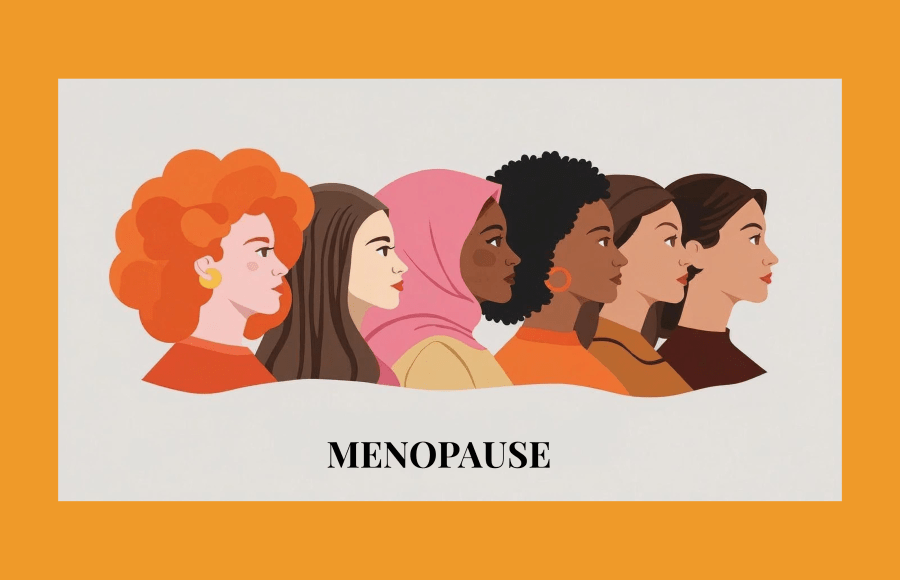
Menopause affects all women, whether they have given birth or not. Nevertheless, the subject remains taboo in all communities, even if it is coming out of the shadows thanks in particular to World Menopause Awareness Day in October.
I wanted to address the menopause of Muslim women, because the consequences of menopause, in addition to cultural and religious preconceptions, affect their spirituality and their religious practices.
In most Muslim communities, it is understood that the Qur’an mentions menopause in Sura 24 verse 60. The word « menopause » does not appear in this verse, but the word meaning « woman of a very advanced age » does.
A very old woman is necessarily menopausal, so we can imagine how over time the expression « very old woman » is replaced by « menopausal woman ».
However, for a majority of women menopause occurs at the age of 45 onwards and the first signs of this transition appear in their late thirties. This is therefore a far cry from the woman of a very advanced age mentioned in the Qur’an.
To understand how women in Muslim communities apprehend and experience menopause, we must look at its perception in the various countries with a Muslim majority countries; influential countries that widely disseminate their interpretation of Islam.
Menopause in Muslim-majority countries
In some Arab countries, such as some Western states, menopause is often devalued because it is associated with the end of fertility, a fertility attached to femininity. In other words, menopause represents the end of femininity and by extension the end of female sex life.
In countries such as Saudi Arabia, Egypt or Syria, menopause was called the « age of despair ». Since 2021, another expression « the age of renewal »[1] has been gaining ground.
In Farsi, the majority language in Iran, the word menopause translates as, « the time of disappointment » or « the time of despair ».[2]
What is menopause?
Menopause is defined as the cessation of ovulation and the disappearance of menstruation (amenorrhea). It is a physiological process that causes hormonal changes. Since the ovaries no longer produce oestrogen, effects are felt in several areas.
Indeed, oestrogen acts on cognitive functions, cardiovascular health, mood, motivation, the balance of the intestinal microbiota, libido, etc.
Menopause is a process that can begin as early as age 35 in cases of early menopause (there are even earlier cases), with the average age being between 45 and 55 years old. We speak of late menopause at the age of 60.

The symptoms of menopause are varied and differ from one woman to another.
Effect on mental health
- Depression
- Significant fatigue
- Brain fog (memory impairment)
- Attention Disorder
- Irritability
- Sudden loss of interest in activities you used to enjoy
- Suicidal thoughts[3]
Physical Effects
- Heart palpitations
- Itching
- Hot flashes
- Vaginal dryness (causes difficulty in sexual intercourse)
- Urinary disorder (frequent urge to urinate, urinary leakage)
- Weight gain
- Headaches
- Joint pain
- Dry skin
Consequences of menopause on spirituality
From perimenopause or premenopause,[4] women feel a lack of interest in what they were passionate about, spirituality can be one of them. The time devoted to the chanting of the Qur’an can decrease due to lack of interest and the disappearance of connection with the Divine.
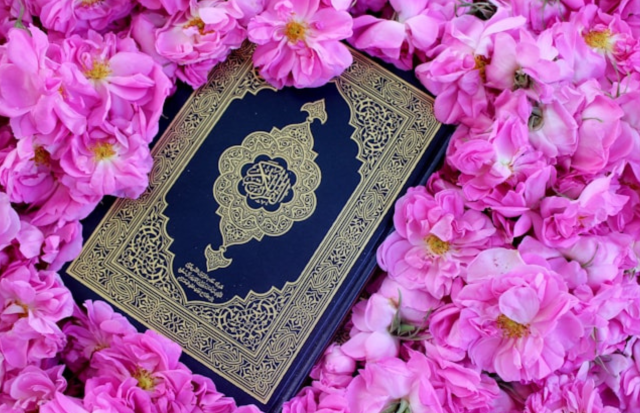
Unfortunately, many Muslim women do not and will not dare to speak about it.
They will imagine that they are victims of some occult evil or that they have lost their faith and will choose to remain silent.
In a religious tradition rooted in memorizing verses from the Qur’an and ritual gestures, memory problems arising from the perimenopausal period can disturb, disconcert, and reinforce a state of sadness that may be accompanied by suicidal thoughts.
Special cases of childless women by circumstances
Menopause, for many women who are childless due to life circumstances, marks a painful transition as it puts a definitive end to the possibility of conceiving biologically.
Even for those in the advanced process of mourning, menopause plunges women back into a deep depression because this cessation of menstruation marks a brutal end to any hope that may have been dormant deep inside them. “As long as there is a period, there is hope!”
Add to this heartbreaking realisation all the effects of menopause, and women who are childless due to circumstances become a more vulnerable and more at-risk group.
What to do?
Learn more about menopause and help others understand it better since it has repercussions on a woman’s personal and professional environment.
Understanding and accepting the symptoms of menopause will lead to rethinking one’s spiritual life.
The connection to the Divine goes through so many roads! (Nature for example) Looking up more often to gaze at the sky and remembering the immensity of the Almighty, would be a first step.
Every woman should be provided with psychological, medical[5] and spiritual support.
Women who are childless due to circumstances can find specialists in the experience of a woman without children due to circumstances. Visit the resources page.
Information on menopause here.
© Photo credit Canva / Discussions Essentielles
[1] In 2021, the UNPF-supported company TENA launched a campaign aimed at women to choose an expression other than « the age of despair » to refer to menopause.
[2] Elham Amini, Menopause in Iranian Muslim Women: Gendered and Sexual Experiences of Menopausal Women, Palgrave Macmillan,2023
[3] The highest rate of female suicide is among women aged 45 to 55.
[4] Perimenopause occurs a few years before menopause. The first signs are irregular, very heavy and light periods.
[5] Hormonal treatment for menopause is also available, as well as natural solutions. Every woman should consult and inquire according to the severity of the symptoms.
 DISCUSSIONS ESSENTIELLES