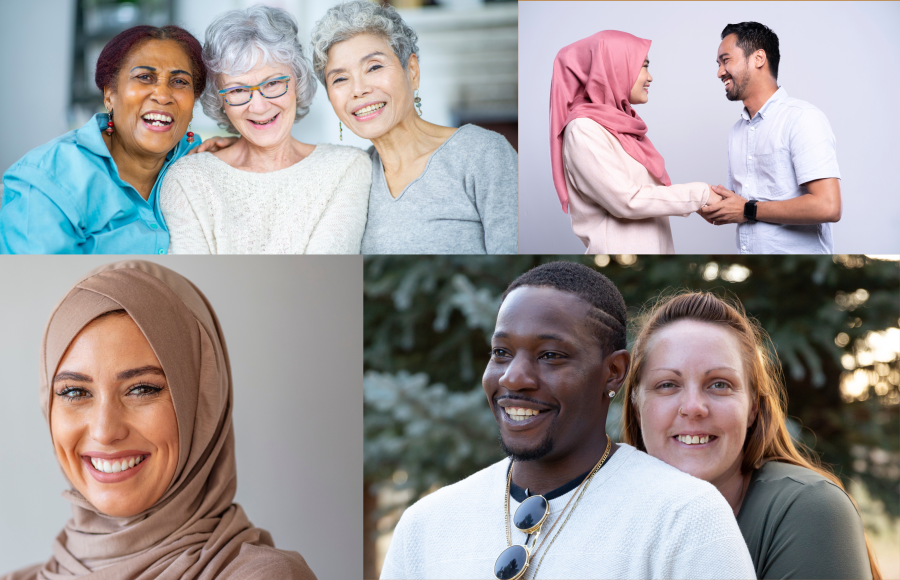
Childless Muslim men and women are human beings like everyone else. Since the subject of childlessness remains taboo in our Muslim communities, they are ignored. Therefore, we do not know who they are.
Often among these childless Muslims, some seek support. This is not surprising, because living in a pronatalist society and a community that portrays procreation as a religious obligation, isolates and undermines not only mental health, but also spirituality.
A quest for support yes, but not just any support!
For this, it is imperative that Muslim men and women, and religious leaders know who childless people are.
People without children fall into two main categories. People without children by choice, childfree and people without children by life circumstances, childless.
Childfree
At first glance, it is expected that childfree people are happier with their choice of child-free life; but this is without taking into account the comments made by pronatalist societies that demonise people without children, particularly those who are childfree.
Many Muslim communities in which the idea that procreation is a religious duty rejects the choice not to have a child and at the same time the people who make this choice. Some childfree Muslims men and women then conceal their decision and remain evasive about the reasons for not having children.
Childless by life circumstances
There are many life circumstances that lead to childlessness; there are as many as there are people without children.
Being single.
Being single during one’s fertile years.
Being single and a carer. In this case, the prospect of looking after a sick or disabled relatives scares off potential partners. Sometimes the caregiver does not have time to devote to his or her personal life.
Not wanting children because one feels that they have already raised their siblings after the death or the abandonment of their parents.
Having wanted children from a very young age, but being struck by an illness.
Suffering from a medical condition such as endometriosis, cancer, etc.
Unexplained infertility[1].
Successive failures of IVF treatment
Widowhood.
Family conflicts over the choice of a partner that drag on.
Divorce at the end of one’s fertile years.
Divorce and remarriage at the end of one’s fertile years.
As a victim of domestic violence, physical, mental and emotional recovery takes time.
Early menopause.
Childfree or childless, this list is not exhaustive.
And I haven’t mentioned cases of ambivalence.
Original Text Qui sont les musulmans et les musulmanes sans enfant ?
Translation by Discussions Essentielles and Deep L
© Photo credit Canva- Photo montage DiscussionsEssentielles
About the author
I am a French Muslim author with a passion for Islam. I studied Islam in a traditional and academic setting. My interest in the subjects of childlessness began over 10 years ago.
[1] Infertility is when pregnancies are absent despite unprotected sex for at least one year. INSERM

